
Capital Brief
A practical guide to mining project finance: structuring bankable mines and offtake-linked capital
How institutional lenders, sponsors, and offtakers actually structure debt, royalties, streams, and prepayments across the mine lifecycle — from feasibility through steady-state production.
June 19, 2026 · 18 min read · Lankford Metals — Capital Markets
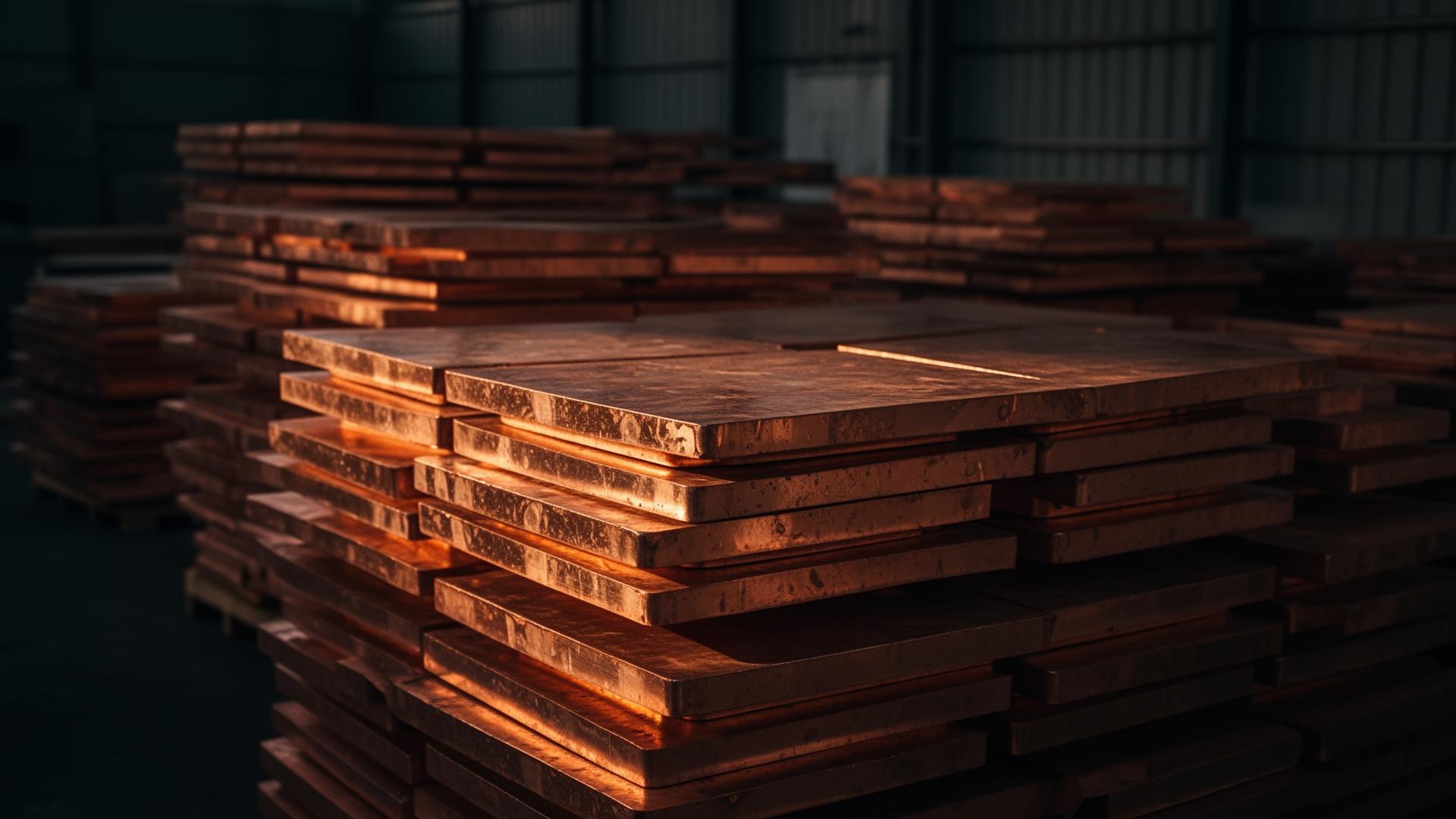
Mining project finance is the discipline of moving an orebody from a feasibility study into a producing, cash-generating asset using a capital stack that survives commodity cycles, permitting delays, and construction risk. Done well, it allocates each risk to the party best able to price it — sponsor equity absorbs geology and execution, senior debt is sized against contracted cash flow, and offtakers, royalty holders, and stream providers monetize the long-dated optionality embedded in the resource.
This guide sets out how we at Lankford Metals approach that work for institutional capital: what makes a project bankable, how the instruments fit together, where covenant packages tend to break, and why offtake is increasingly the most important single document in the file.
The lifecycle and where capital enters
A mining project moves through reasonably predictable stages — exploration, scoping (PEA), pre-feasibility (PFS), definitive feasibility (DFS or BFS), permitting, construction, commissioning, ramp-up, and steady-state production. Each stage has a characteristic risk profile and a characteristic investor base. Exploration and scoping are equity-only domains: the geological risk is uninsurable and the cash flow is hypothetical. Pre-feasibility starts to attract strategic equity and early royalty interests. Definitive feasibility is where project finance becomes possible — reserves are classified to a bankable standard, capital and operating costs carry a defensible accuracy band (typically ±15%), and metallurgical recoveries have been demonstrated at pilot scale.
Senior debt almost always closes alongside, not before, a binding offtake package and a fully funded equity cheque. Construction is the most dangerous window in the lifecycle — cost overruns, schedule slips, and contractor disputes are the dominant cause of restructurings — and the financing must contemplate a completion guarantee, a cost-overrun facility, and a debt service reserve sized to carry the project through commissioning even if first concentrate slips by two or three quarters.
What makes a project bankable
Bankability is not a single test; it is a stack of independent confirmations that a senior lender can underwrite. In practice, six conditions show up in every credit committee memo: a reserve and resource statement signed by a Qualified Person under NI 43-101, JORC, or SK-1300; a definitive feasibility study with an Independent Engineer's review; demonstrated metallurgy and process flowsheet at a scale relevant to the design throughput; permits in hand or on a credible critical path with regulatory and community consents; a binding offtake covering enough of nameplate production to service debt with cushion; and an EPC or EPCM contract with a creditworthy contractor carrying meaningful liquidated damages.
Absent any one of these, the deal does not die — but it migrates up the capital stack. Mezzanine, royalty, stream, and offtake-linked prepayments exist precisely to bridge projects that are economic but not yet senior-bankable.
“A bankable mine is not the one with the best grade. It is the one with the cleanest contracts.”
The instruments and how they stack
Senior secured debt sits at the top of the stack and is the cheapest capital, typically priced over SOFR with a spread that reflects jurisdiction, commodity, and completion risk. It is sized against a Loan Life Coverage Ratio (LLCR) and a Debt Service Coverage Ratio (DSCR) computed on long-term consensus prices, not spot, and almost always with a downside case at the 25th percentile of the bank's internal price deck. Tenors run seven to twelve years post-completion for base metals, shorter for precious metals where streams compete.
Mezzanine and subordinated debt fills the gap between senior advance rates and equity. It is more expensive, often with PIK toggles and equity warrants, and accepts a second-lien position behind the senior facility. It is most common in mid-cap producers expanding existing operations, where the brownfield risk profile is acceptable to a private credit fund but the senior bank is fully drawn.
Royalties transfer a percentage of revenue (typically a Net Smelter Return, or NSR, of 1–3%) to a financier in exchange for an upfront payment. They are off-balance-sheet for the sponsor, do not carry covenants, and are perpetual — meaning the royalty holder participates in any future expansion or mine-life extension. For the sponsor, the cost is dilution of long-dated upside; for the financier, the return is leveraged to reserve growth.
Streams are larger, contractually denser instruments under which the financier pre-pays for the right to purchase a fixed percentage of metal production at a deep discount to spot (often 20% of the spot price at delivery, with the discount itself being the stream's economic return). Streams are most common on by-product metals — gold or silver produced from a copper mine — where the sponsor values the certainty of a large upfront payment more than the by-product's long-dated cash flow.
Offtake-linked prepayments are the instrument we see most often in 2026. A trading house, smelter, or end-user pays cash today against future deliveries of concentrate or refined metal, typically over three to seven years, with the prepayment amortized against each shipment. Pricing references a benchmark (LME, COMEX, Platts) with treatment and refining charges negotiated separately. The prepayment is functionally a loan — it appears as debt on the balance sheet under IFRS 15 if the pricing is not market-linked — but it carries no financial covenants and no security beyond the offtake itself.
Why offtake is now the gating document
For most of the last decade, lenders treated offtake as supportive but not decisive — a binding contract with a creditworthy buyer was helpful, but senior debt sizing was driven primarily by reserves and the price deck. That has changed. With smelter treatment charges (TCs) for copper concentrate at multi-year lows, with sovereign-aligned buyers locking up long-dated supply, and with end-users in the EV and grid supply chains under regulatory pressure to secure traceable units, the offtake contract is now the single most scrutinized document in the credit file.
A bankable offtake in 2026 has five characteristics: a tenor that matches or exceeds the debt amortization schedule; a counterparty rated investment grade or backed by a parent that is; a price formula referencing a transparent benchmark with no discretionary adjustments; a volume commitment expressed as a percentage of production with a floor in absolute tonnes; and a delivery point and Incoterms that allocate logistics risk explicitly. Anything less and the lender will haircut the contribution to the DSCR calculation, sometimes to zero.
Risk allocation and the covenant package
Senior loan documentation for a mining project runs to several hundred pages, but the economic substance lives in a handful of provisions. The completion test defines when the project transitions from construction-phase recourse (often to a parent guarantee or sponsor support agreement) to limited-recourse project finance — typically requiring the mine to demonstrate nameplate throughput, recoveries, and unit operating cost over a sustained test period (90 days is common).
Cash sweep mechanics direct excess cash flow toward debt repayment once the project is operational, usually with a sliding scale tied to the DSCR. Distribution lockups prevent dividends until the debt service reserve account is fully funded, the LLCR is above a threshold (commonly 1.4x), and historical DSCR over the trailing twelve months is above 1.3x. Hedging covenants require a minimum percentage of production (often 30–50%) to be price-hedged for the first two to three years post-completion, ramping down as the loan amortizes. Reserve tail covenants require a minimum number of years of proven and probable reserves to remain at final debt maturity — typically 25–35% of the original reserve life — so the lender is never amortizing into an empty pit.
These covenants are not boilerplate. They are the mechanism by which the lender shares cash flow with the sponsor without taking equity risk, and the negotiation around them is where most of the value in a project finance package is created or destroyed.
Jurisdiction, permitting, and ESG as credit inputs
Jurisdiction has always mattered, but the analytical framework has tightened. Lenders now run an explicit country risk overlay that combines fiscal stability (royalty and tax regimes, recent renegotiations), permitting predictability (time from application to construction permit, history of judicial reversals), community and indigenous consent regimes (FPIC standards, consultation track record), and currency convertibility. A tier-one orebody in a tier-three jurisdiction will clear at a materially wider spread, if it clears at all, and will often require political risk insurance from MIGA or a private market provider as a condition precedent to first drawdown.
ESG is no longer a separate workstream. Tailings storage facility design under GISTM, water balance and acid rock drainage management, scope 1 and 2 emissions intensity benchmarked against industry curves, and a credible mine closure plan with a funded reclamation bond all appear in the credit memo alongside the DSCR. Lenders subject to the Equator Principles — which now covers most international project finance banks — apply IFC Performance Standards as a condition of lending, and breach of those standards is a potential event of default.
How we structure at Lankford Metals
Our work concentrates on the layer between sponsor equity and senior bank debt — the structured capital that bridges projects from feasibility into production. We structure senior positions for capital providers against contracted cash flow where a binding offtake from a creditworthy counterparty supports a defensible DSCR. We prepare advance-buy and prepayment structures on producing assets with established metallurgy, where the credit risk is operational rather than geological. We coordinate selective LP and JV equity opportunities in platforms that offer investors control rights, a clear distribution waterfall, and alignment with operators who have built and operated mines before.
We avoid greenfield exploration without commensurate equity cushion, single-asset projects in jurisdictions with active fiscal disputes, and capital stacks where the senior, mezzanine, and royalty layers have not been negotiated as a coherent package. Capital is available in 2026. Discipline — and structure — is what makes it bankable.
Closing note
Mining project finance rewards sponsors who treat the capital stack as part of the design, not as a procurement exercise that happens after the DFS is signed. The offtake counterparty, the royalty partner, the senior lender, and the equity sponsor each have a different view of the same orebody, and the work of structuring is reconciling those views into a set of contracts that survive a full commodity cycle. That is the work we do.
For inquiries related to this note, contact the capital markets desk.